Enable

Performance & Recovery

Aim

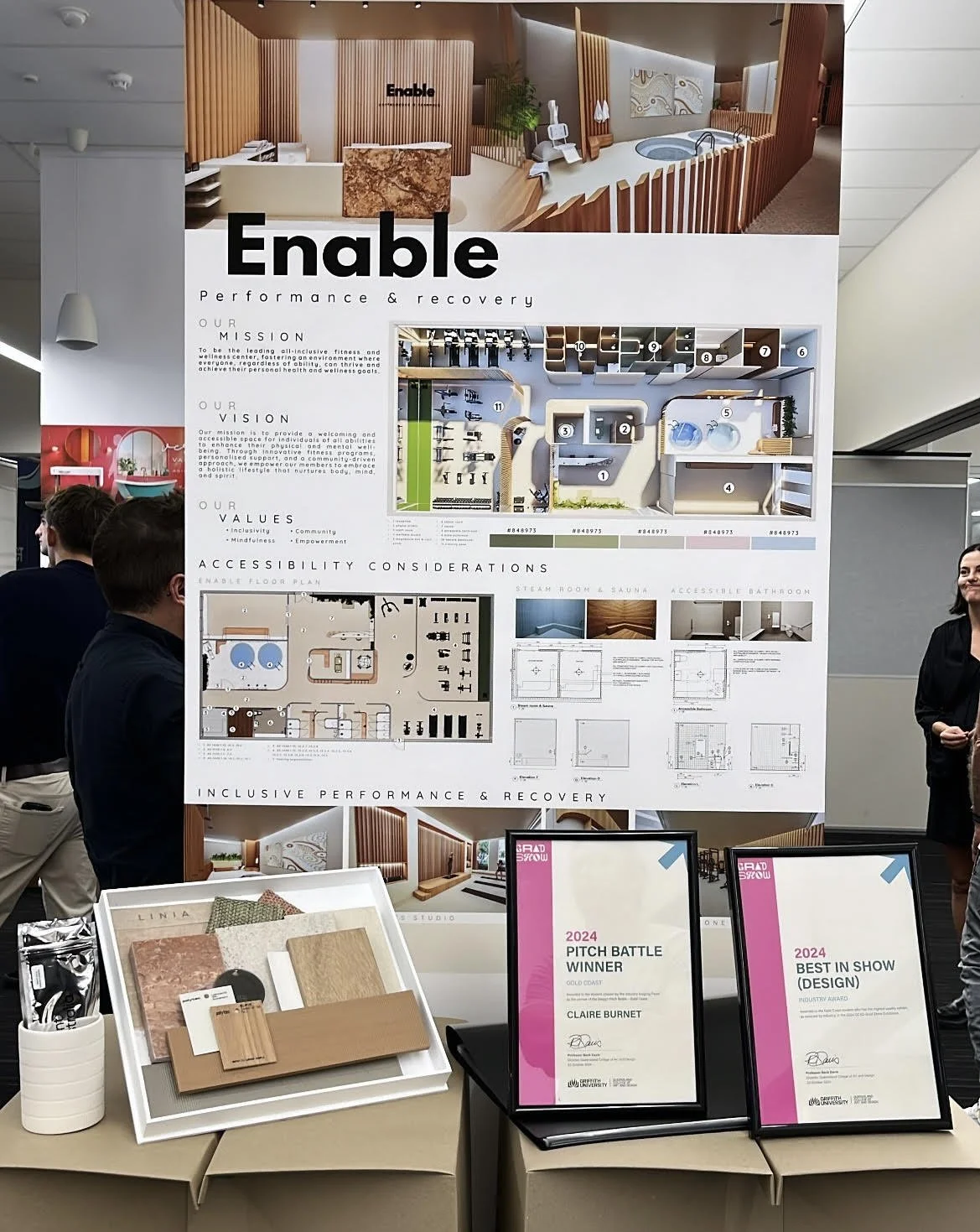
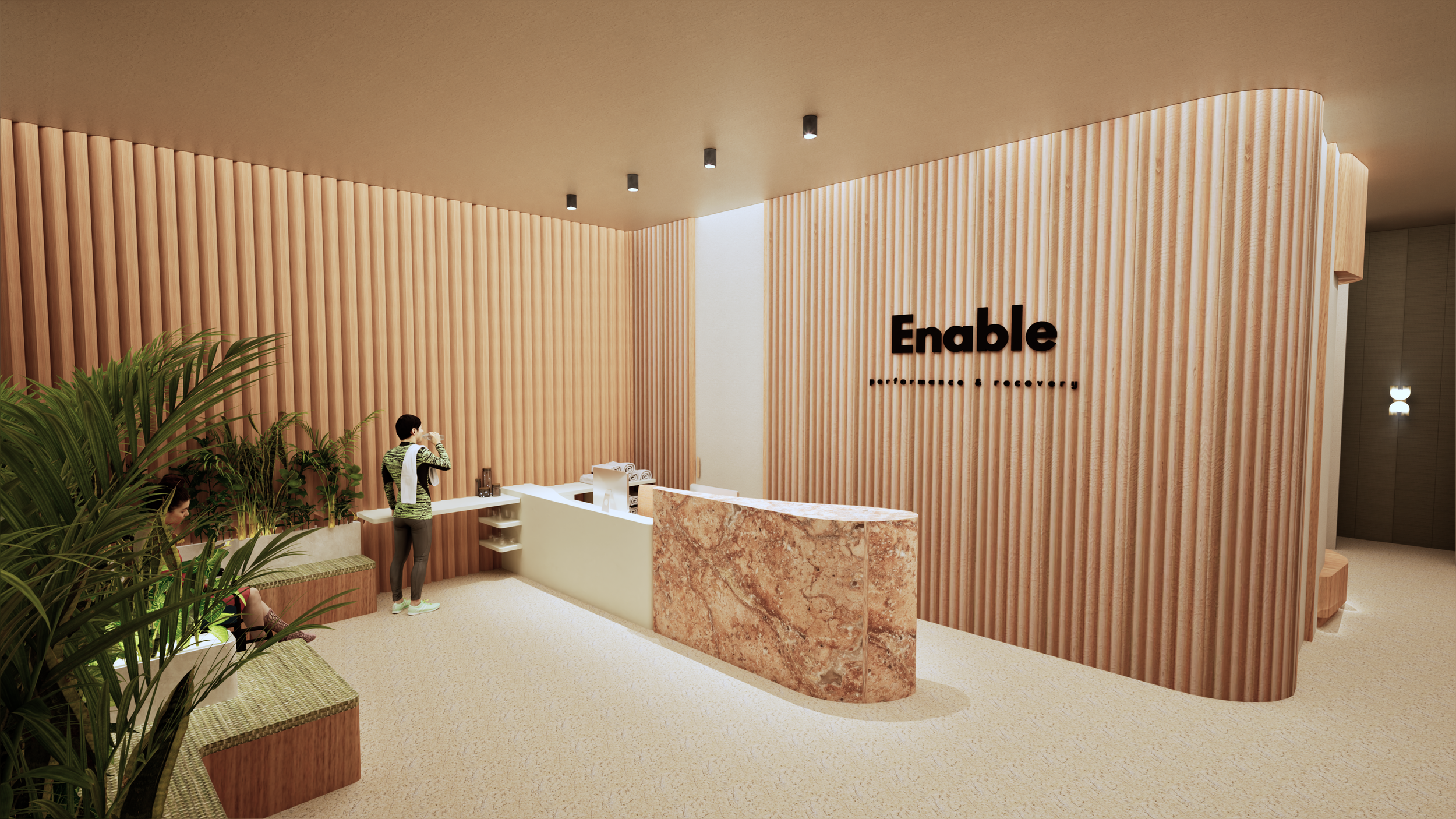
Enable Performance and Recovery was the result of a year-long major project undertaken independently during my final year at university. The brief required us to research, develop, and create a design with the potential to address a real-world problem. From this concept, Enable was born, setting a new standard as an all-inclusive fitness and wellness centre on the Gold Coast.

Enable’s goal is to foster an environment where everyone, regardless of ability, can thrive.
Process

The process of Enable was designed to mimic the steps undertaken in a “real-world project.” The design process commenced with thorough research and ideation, progressing to schematic design and development, and culminating in the final outcome of construction documentation, renders, FF&E, materials selection, and the creation of a physical model.
SITE ANALYSIS
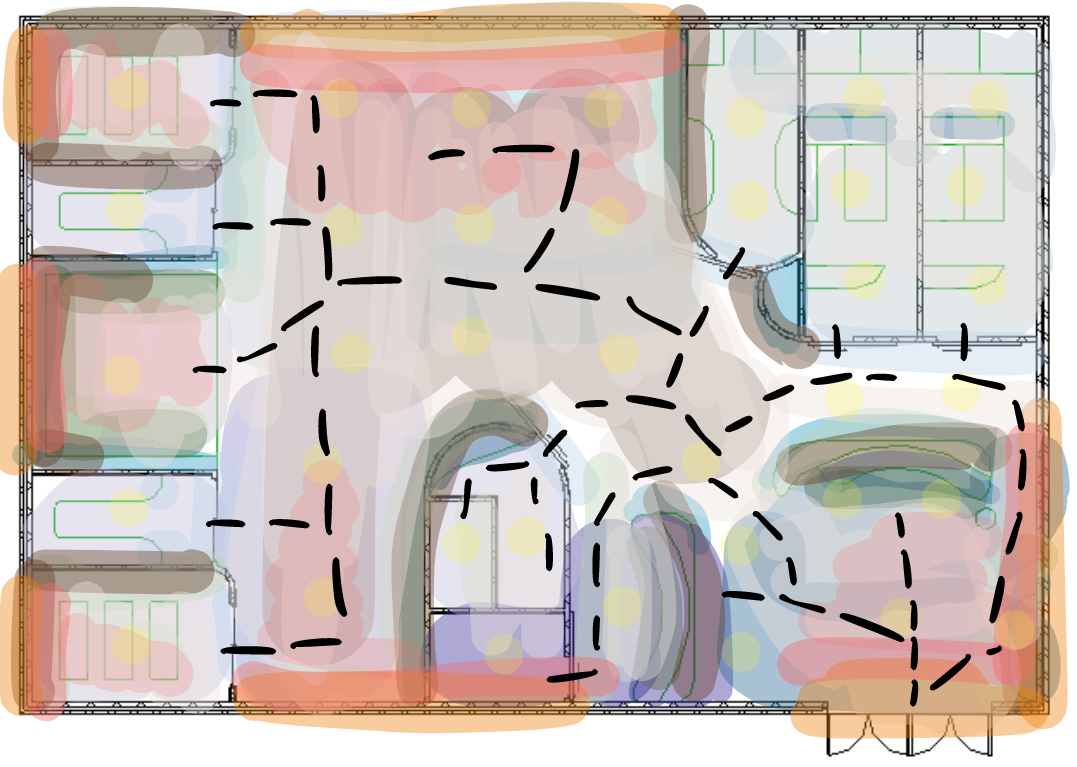
Hand-drawn sketches of three different layouts for a training or recovery program. The first sketch shows kitchen items like a stove, sink, and pots. The second sketch features labeled circles and a large oval, with words like 'Training' and 'Recovery.' The third sketch depicts a room with a fire, two circular objects, and shelves or drawers, with labels such as 'Hot' and 'S.'

SCHEMATIC DESIGN DEVELOPMENT
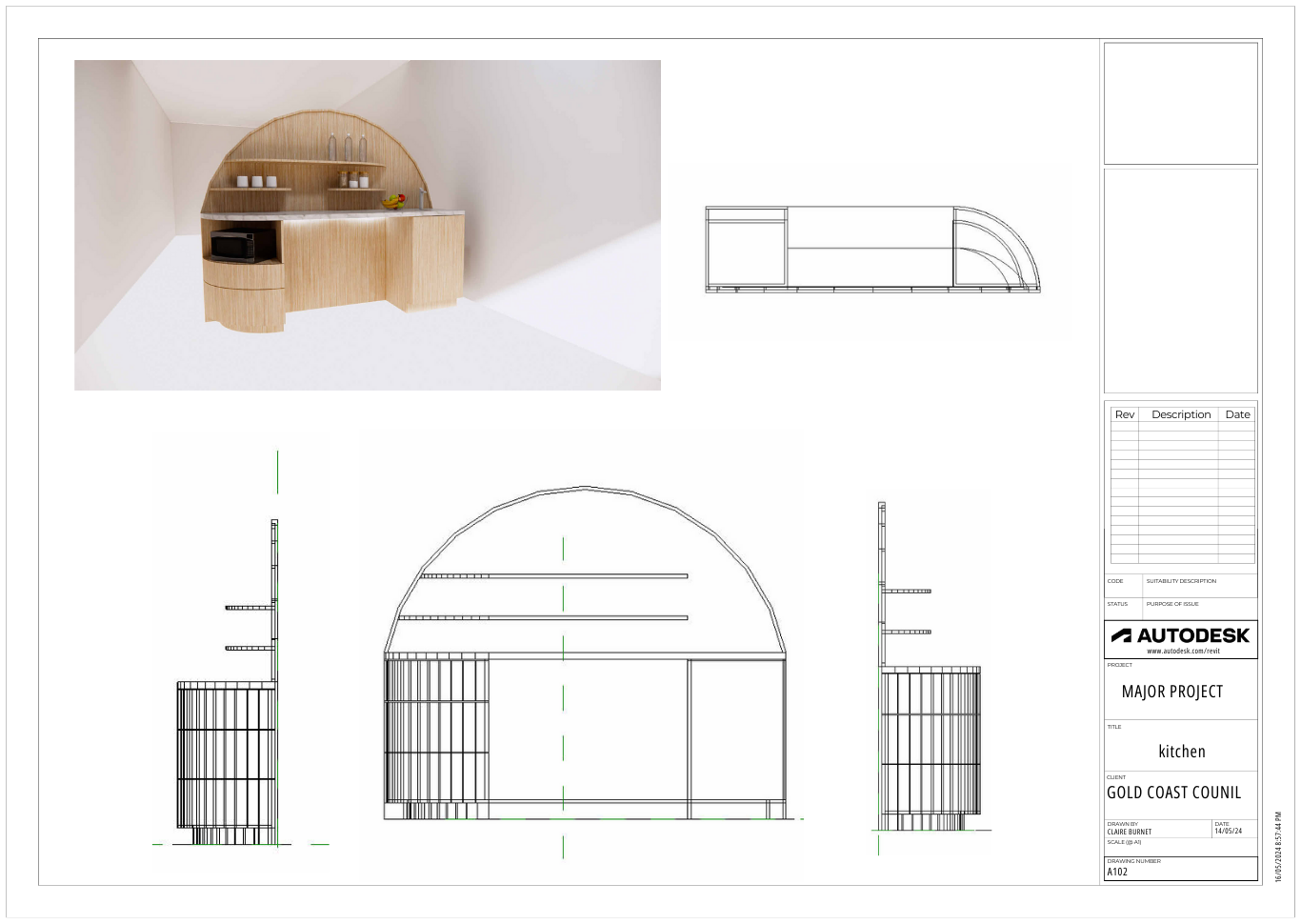
Digital design plan of a modern kitchen with curved wood cabinetry, shelves, and integrated appliances, including technical drawings and a 3D rendering.
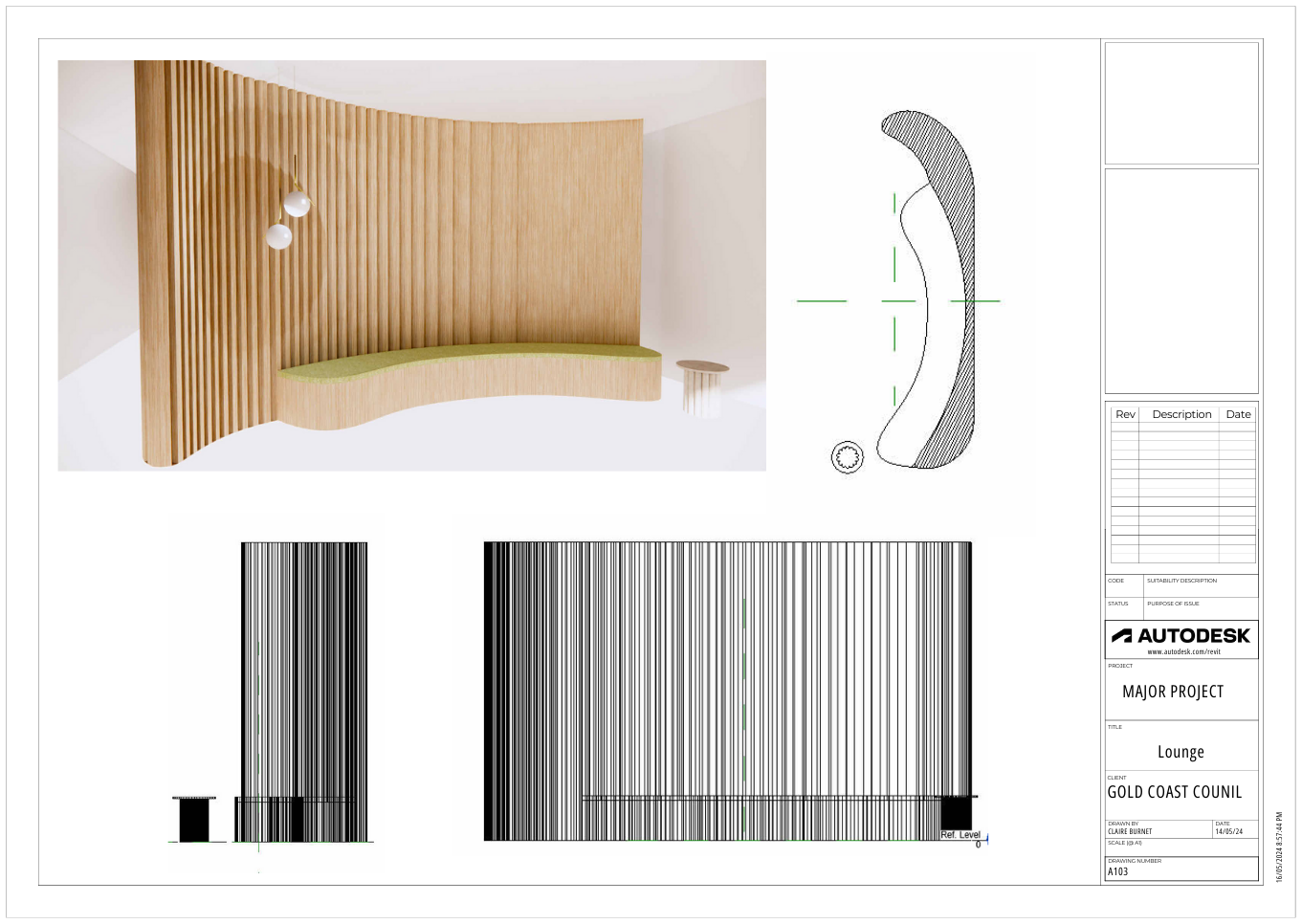
Architectural design for a lounge area featuring a curved wooden slat wall, a green cushioned bench, and modern pendant lights.
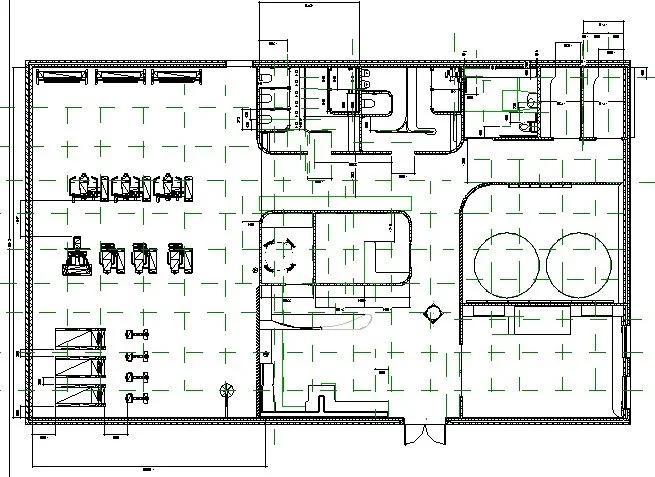
Floor plan layout of a building featuring various rooms, including a large open area with equipment, smaller rooms, restrooms, and circular tanks or containers.
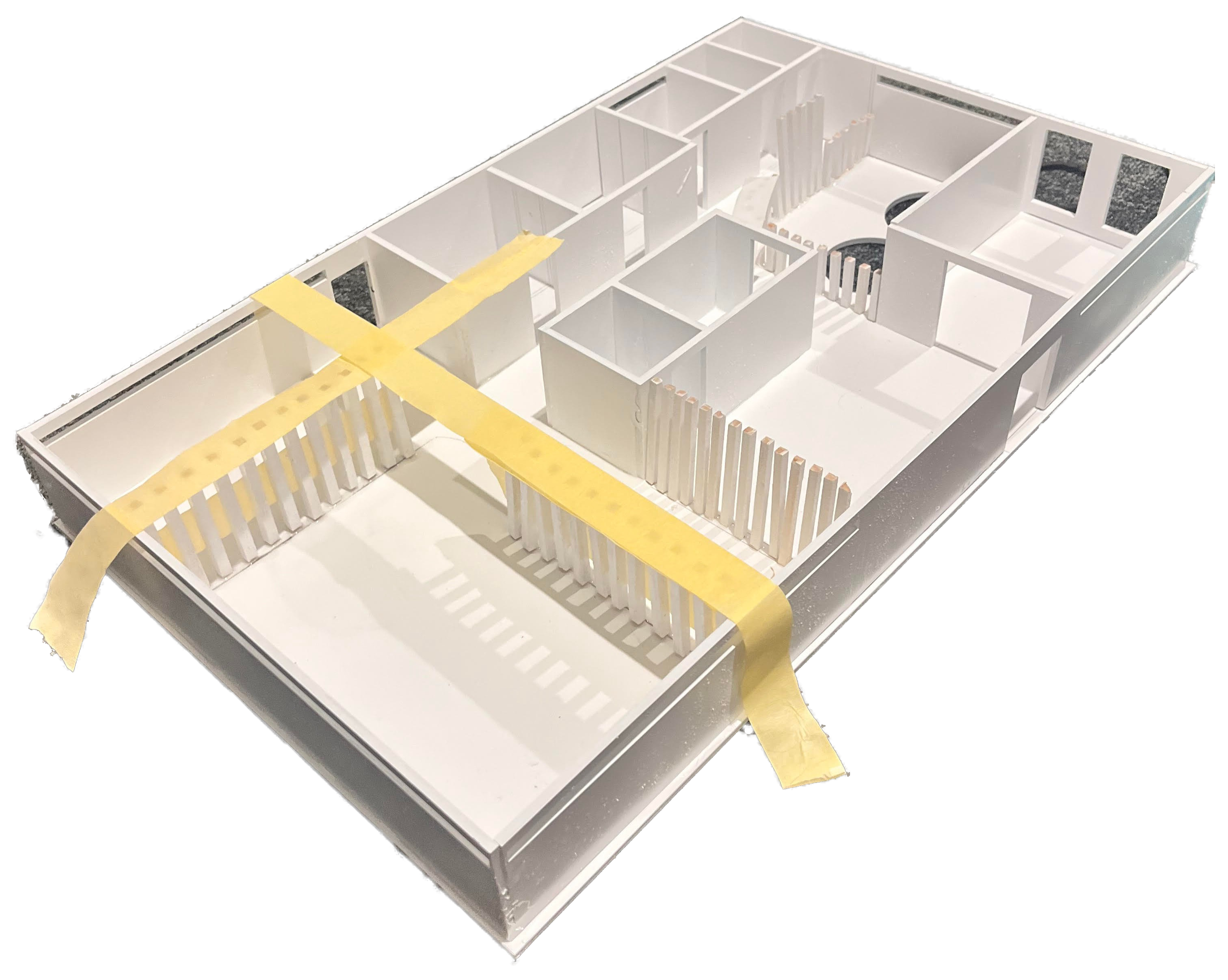
A white architectural model of a house with interior rooms and exterior fencing. Yellow tape is laid across the model, indicating a pathway or boundary.
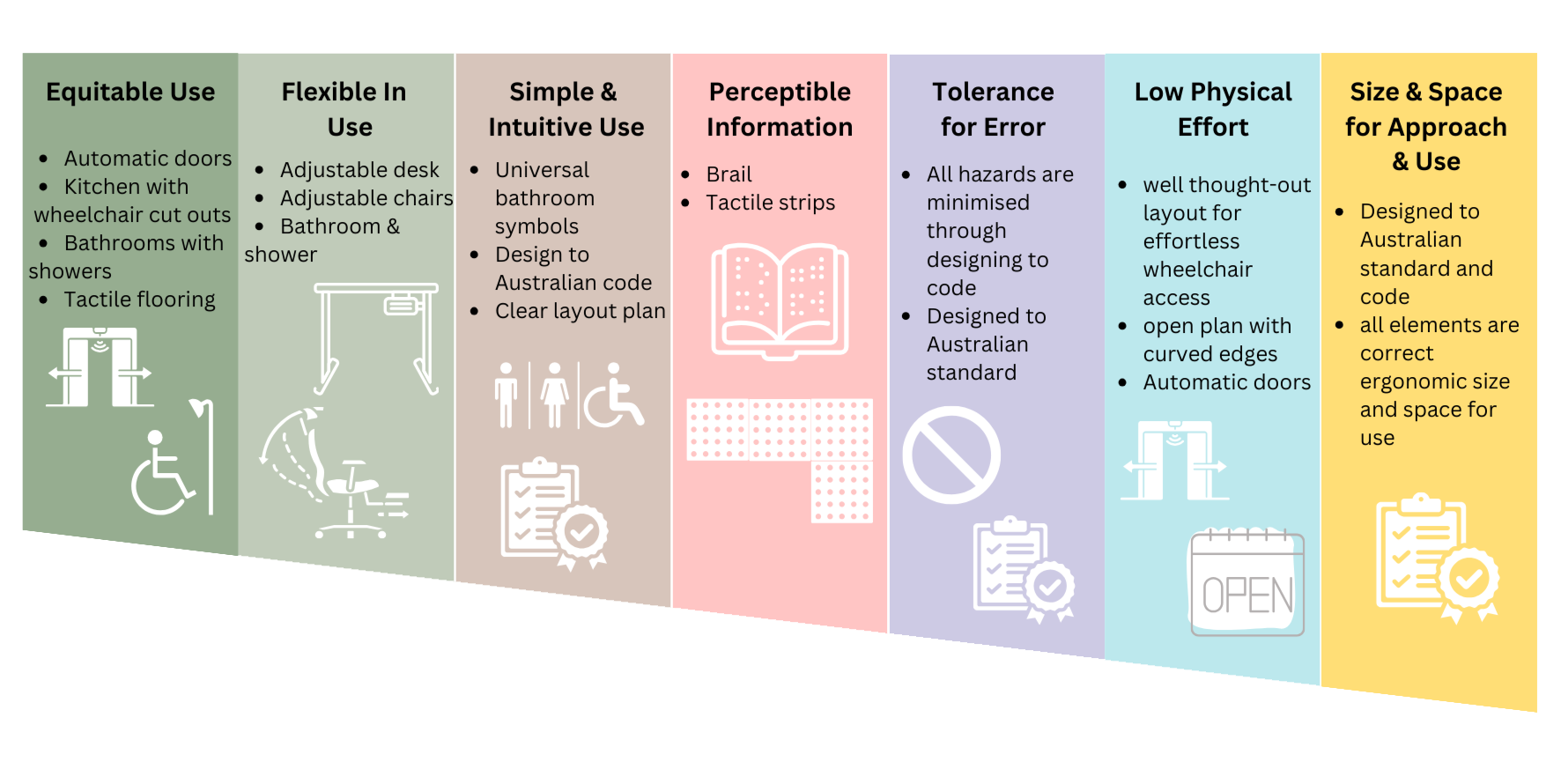
Infographic outlining seven principles of Australian accessibility standards, including equitable use, flexible in use, simple and intuitive, perceivable information, tolerance for error, low physical effort, and size and space for approach and use. Each principle has a brief description and relevant icons.
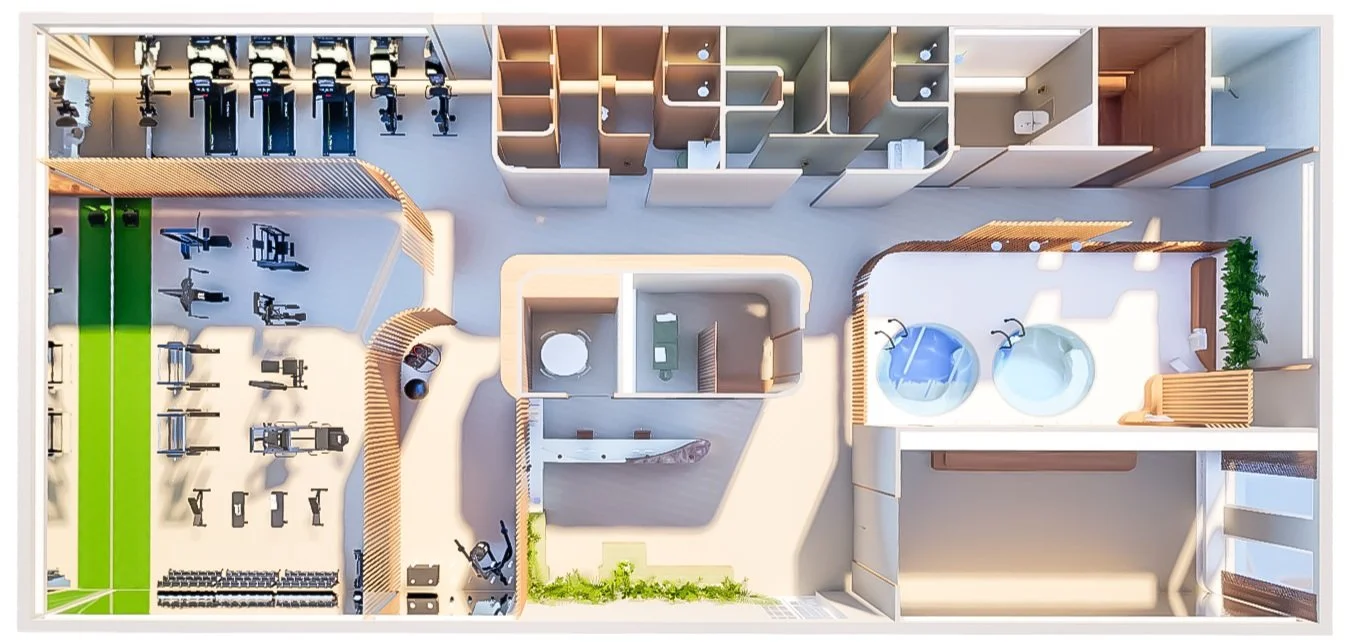
Floor plan of a fitness center with designated workout areas, including weightlifting section, cardio machines, wellness area with hot tubs, and changing rooms with lockers and sinks.

Outcome

Enable was a deeply personal project, inspired by past experiences of both myself and others. I placed immense pressure on myself to deliver the highest-quality outcome I was capable of. Ultimately, Enable won the industry award for Best Design in Show at the 2024 Griffith QCA Graduation Show and received the industry-judged award for Best Design Pitch. Despite these challenges.

The process tested my skills, adaptability, and resilience. While the project proved that hard work and dedication pay off, it also highlighted areas for improvement. Major technical difficulties close to submission impacted the quality of the final renders, leaving me less satisfied with those outcomes. Enable was a success on paper and an invaluable learning experience. It has motivated me to address my weaknesses and continue evolving into a better designer.

A graphic design showing branding concepts for 'Enable' with the tagline 'performance & recovery'. It features three color blocks with different versions of the word 'Enable' in various fonts and sizes, along with a section demonstrating two font types: Gotham and Montserrat, including their alphabet sets and special characters.
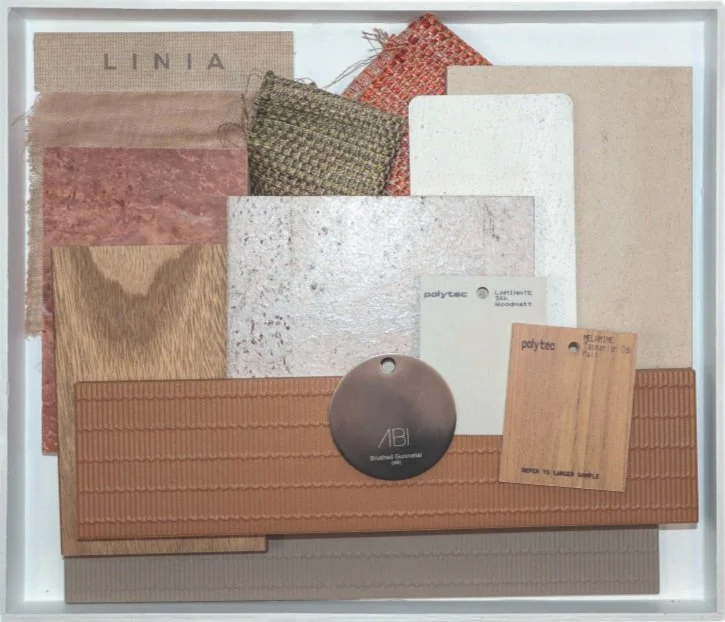
Sample swatches of different materials including fabric, tile, wood, and sample cards for design and color matching.

CLICK ME TO VIEW POSTER

Downloads

BRANDING

FF&E

Logo with the word 'Enable' and a tagline 'performance & recovery' underneath.