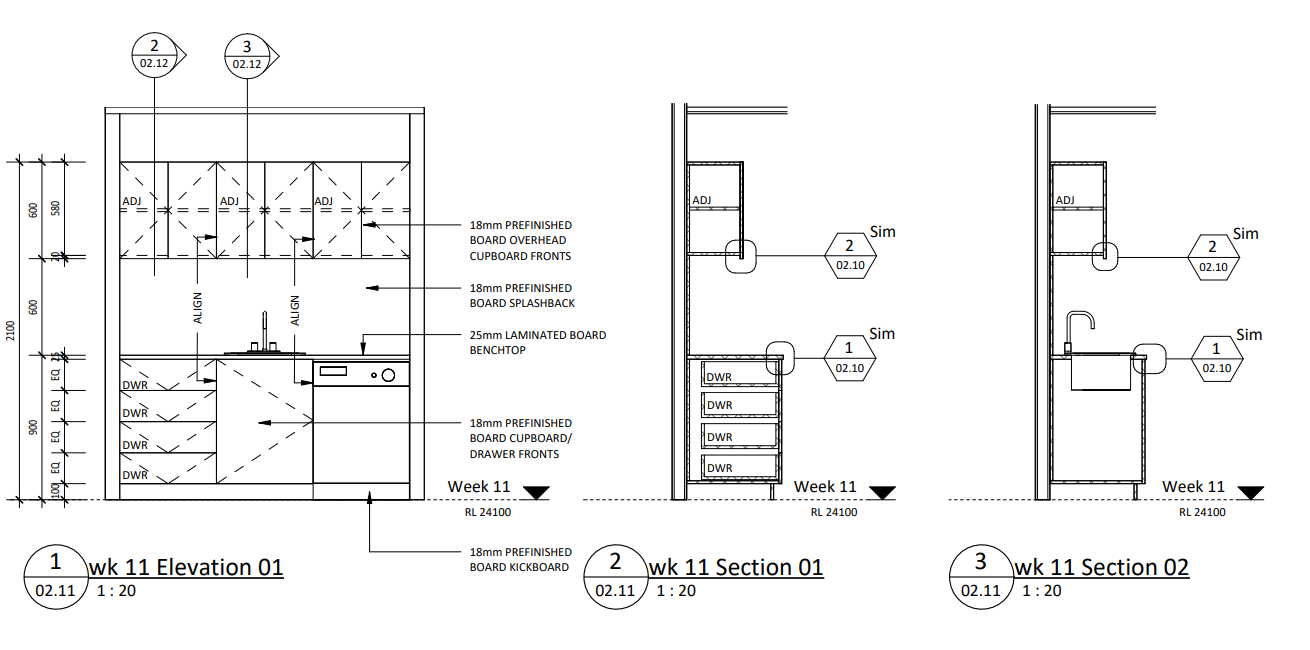
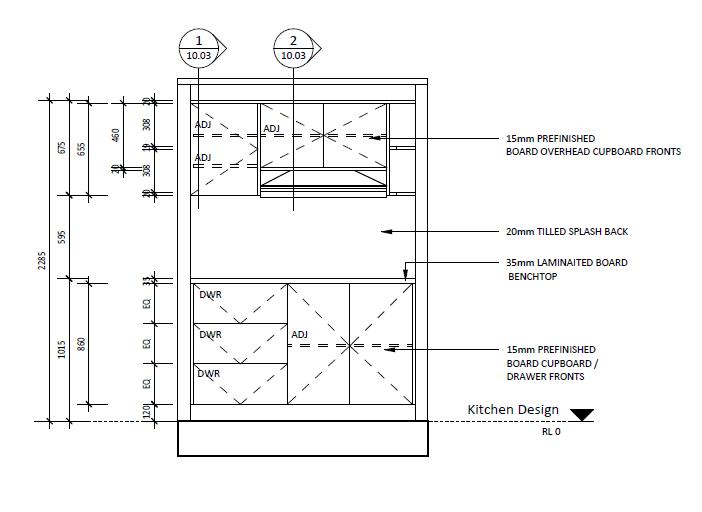
The Nourish Project was one of my first introductions to technical documentation. During my studies at Griffith University, we were tasked with designing and producing a partial joinery documentation package for two kitchen sections —one fictional and the other based on my own home. The objective was to broaden our understanding of Revit and develop the technical competency required to execute fundamental technical drawings in accordance with Australian standards.
Aim
Nourish

Process
The Nourish Project followed a structured approach, closely resembling that of a real-world project. The initial task was to develop a joinery documentation package for a small fictional kitchenette under the supervision of our tutor. Once completed to his satisfaction, we progressed to independently documenting a section of kitchen joinery within our own homes.
The process began with an initial site survey, assessing a specific section of our home kitchens. From there, concept development and schematic design were undertaken to identify spatial inefficiencies and explore practical design solutions. This research-driven approach ensured that functionality and usability were prioritised.
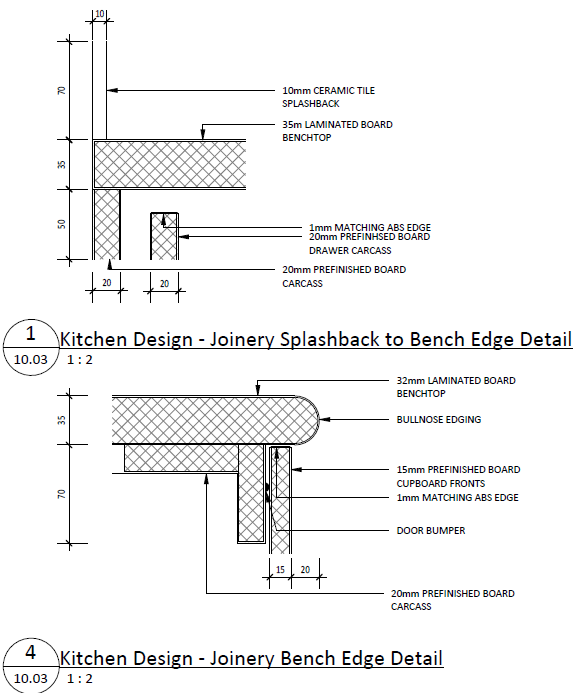
The documentation phase was then carried out using Revit, covering the following elements:
Joinery details
Detailed plans
3D views
Joinery elevations
Joinery sections
Outcome
The Nourish Project was a pivotal learning experience, marking one of my first deep dives into technical documentation and spatial design. This project provided an invaluable opportunity to engage with real-world design methodologies, equipping me with essential skills such as problem-solving, and adaptability. While the structured approach mirrored industry practices, the independence required in the latter stages pushed me to refine my technical competency and develop a critical eye for detail.